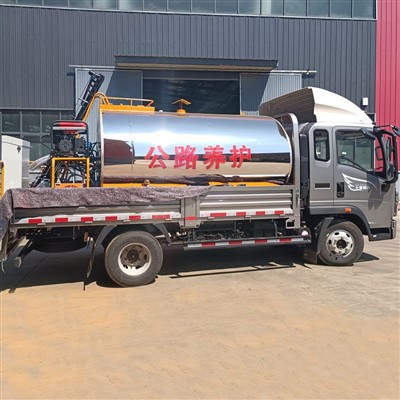
As a supplier of Rubber Asphalt Plants, I am often asked about the output quality assurance system of our products. In this blog post, I will delve into the key components of our quality assurance system, which ensures that the rubber asphalt produced by our plants meets the highest standards.
1. Raw Material Inspection
The quality of rubber asphalt starts with the raw materials. We have a strict inspection process for all incoming raw materials, including asphalt, rubber powder, and additives.
Asphalt
Asphalt is the base material for rubber asphalt. We source asphalt from reliable suppliers and conduct comprehensive tests upon arrival. These tests include penetration, softening point, and ductility. Penetration measures the hardness of the asphalt, while the softening point indicates its temperature resistance. Ductility shows the asphalt's ability to stretch without breaking. Only asphalt that meets our predefined specifications is used in the production process.
Rubber Powder
Rubber powder is a crucial component that enhances the performance of asphalt. We check the particle size distribution, rubber content, and moisture content of the rubber powder. The particle size affects the dispersion of the rubber in the asphalt, and an appropriate particle size range is essential for uniform mixing. The rubber content determines the degree of modification, and we ensure that it is within the optimal range for the desired rubber asphalt properties. Low moisture content is necessary to prevent foaming during the mixing process.
Additives
Additives are used to further improve the performance of rubber asphalt, such as enhancing its adhesion, aging resistance, and stability. We verify the quality and compatibility of additives through laboratory tests. These tests assess how the additives interact with the asphalt and rubber powder to ensure that they contribute positively to the overall quality of the rubber asphalt.
2. Process Control
The production process of rubber asphalt is carefully controlled to ensure consistent quality. Our Rubber Asphalt Plants are equipped with advanced control systems that monitor and adjust various parameters in real - time.


Mixing Temperature
The mixing temperature is a critical factor in the production of rubber asphalt. If the temperature is too low, the rubber powder may not fully dissolve in the asphalt, resulting in poor dispersion and reduced performance. On the other hand, if the temperature is too high, the asphalt may oxidize and the rubber may degrade. Our control systems maintain the mixing temperature within a narrow range based on the type of asphalt, rubber powder, and additives used.
Mixing Time
The mixing time also affects the quality of rubber asphalt. Sufficient mixing time is required to ensure that the rubber powder is uniformly dispersed in the asphalt. Our plants are designed to provide an optimal mixing time based on the production capacity and the characteristics of the raw materials. The control system monitors the mixing time and alerts operators if there are any deviations from the set time.
Agitation
Continuous agitation is necessary to keep the rubber powder in suspension and prevent it from settling at the bottom of the mixing tank. Our Rubber Asphalt Plants are equipped with efficient agitators that ensure proper agitation throughout the mixing process. The speed and intensity of the agitation are adjusted according to the viscosity of the rubber asphalt and the particle size of the rubber powder.
3. In - process Sampling and Testing
To ensure that the rubber asphalt being produced meets the quality standards, we conduct in - process sampling and testing at regular intervals.
Sampling
Samples are taken from different locations within the mixing tank and at different stages of the production process. This ensures that the samples are representative of the entire batch of rubber asphalt. The sampling frequency is determined based on the production volume and the stability of the process.
Testing
The samples are tested for various properties, including viscosity, elasticity, and storage stability. Viscosity affects the workability of the rubber asphalt during construction, and it is measured using a viscometer. Elasticity indicates the ability of the rubber asphalt to recover its shape after deformation, and it is evaluated through tests such as the elastic recovery test. Storage stability is important to ensure that the rubber asphalt does not separate or degrade during storage, and it is assessed by observing the change in properties over a period of time.
If the test results do not meet the specifications, we immediately take corrective actions, such as adjusting the mixing parameters or adding additional additives.
4. Final Product Inspection
Before the rubber asphalt is dispatched from our plant, a final product inspection is carried out.
Comprehensive Testing
The final product is subjected to a comprehensive set of tests to ensure that it meets all the relevant quality standards. These tests include performance tests under different temperature and loading conditions, as well as chemical and physical property tests. For example, we test the rutting resistance, fatigue resistance, and low - temperature cracking resistance of the rubber asphalt. These properties are crucial for the long - term performance of the asphalt pavement.
Quality Certification
Once the rubber asphalt passes all the tests, it is issued with a quality certification. This certification provides our customers with confidence in the quality of the product. We also maintain detailed records of the production process and test results for traceability purposes.
5. Equipment Maintenance and Calibration
The proper functioning of our Rubber Asphalt Plants is essential for maintaining the quality of the output. We have a regular equipment maintenance and calibration program.
Maintenance
Our maintenance team conducts routine inspections and maintenance of the plant equipment, including the mixing tanks, pumps, heaters, and control systems. Regular maintenance helps to prevent equipment failures and ensures that the plant operates at its optimal performance. It also extends the service life of the equipment.
Calibration
All measuring and control instruments in the plant are calibrated regularly to ensure their accuracy. This includes temperature sensors, flow meters, and weighing systems. Accurate measurement and control are crucial for maintaining the quality of the rubber asphalt production process.
6. Quality Assurance for Different Types of Plants
We offer different types of Rubber Asphalt Plants, such as Mobile Rubber Asphalt Plant and Rubber Modified Asphalt Equipment, and our quality assurance system is adapted to suit the specific characteristics of each type.
Mobile Rubber Asphalt Plant
Mobile Rubber Asphalt Plants are designed for on - site production, which requires high mobility and flexibility. Our quality assurance system for mobile plants focuses on ensuring that the equipment can operate reliably in different environments. The raw material storage and handling systems are designed to prevent contamination and ensure proper mixing even in limited space. The control systems are optimized for quick setup and adjustment to meet the changing production requirements on different construction sites.
Rubber Modified Asphalt Equipment
Rubber Modified Asphalt Equipment is used for large - scale production in fixed - location plants. Our quality assurance system for this type of equipment emphasizes high - volume production efficiency and consistent quality. The equipment is designed for continuous operation with minimal downtime, and the control systems are capable of handling large - scale production while maintaining strict quality control.
Conclusion
At our company, we are committed to providing high - quality Rubber Asphalt Plants and ensuring the output quality of the rubber asphalt produced by our plants. Our comprehensive output quality assurance system, which includes raw material inspection, process control, in - process sampling and testing, final product inspection, equipment maintenance and calibration, and adaptation to different plant types, guarantees that our customers receive rubber asphalt that meets the highest standards.
If you are interested in our Rubber Asphalt Plant or have any questions about our output quality assurance system, please feel free to contact us for procurement and further discussion. We look forward to working with you to meet your rubber asphalt production needs.
References
- "Asphalt Rubber Handbook", National Asphalt Pavement Association
- "Performance - Based Specifications for Asphalt Rubber", Federal Highway Administration
- "Rubber - Modified Asphalt Binders: A State - of - the - Art Review", Journal of Materials in Civil Engineering