Emulsions are heterogeneous systems consisting of two immiscible liquids, where one liquid is dispersed in the other in the form of droplets. The stability of emulsions is a crucial factor in various industries, such as food, cosmetics, and construction. One of the key challenges in maintaining emulsion stability is preventing the sedimentation of particles. Cationic emulsifiers play a significant role in this process, and as a cationic emulsifier supplier, I am well - versed in understanding their impact on particle sedimentation in emulsions.


The Basics of Emulsions and Sedimentation
Before delving into the effect of cationic emulsifiers, it's essential to understand the concept of emulsions and sedimentation. An emulsion is formed when a liquid (dispersed phase) is dispersed in another immiscible liquid (continuous phase). Due to the difference in density between the dispersed and continuous phases, particles in the dispersed phase tend to move under the influence of gravity. This movement, which can lead to the separation of the dispersed phase from the continuous phase over time, is known as sedimentation.
Sedimentation is governed by Stokes' law, which states that the velocity of a spherical particle settling in a fluid is given by the formula:
[v=\frac{2r^{2}(\rho_{p}-\rho_{f})g}{9\eta}]
where (v) is the sedimentation velocity, (r) is the radius of the particle, (\rho_{p}) is the density of the particle, (\rho_{f}) is the density of the fluid, (g) is the acceleration due to gravity, and (\eta) is the viscosity of the fluid.
How Cationic Emulsifiers Work
Cationic emulsifiers are surfactants with a positively charged hydrophilic head group. When added to an emulsion, they adsorb at the interface between the dispersed and continuous phases. This adsorption has several effects on the emulsion system that can influence particle sedimentation.
Electrostatic Repulsion
One of the primary ways cationic emulsifiers affect sedimentation is through electrostatic repulsion. The positively charged head groups of cationic emulsifiers create a positive charge on the surface of the dispersed particles. As a result, the particles repel each other, preventing them from aggregating. Aggregation is a precursor to sedimentation because larger aggregated particles settle more quickly according to Stokes' law. By keeping the particles separated, cationic emulsifiers reduce the likelihood of sedimentation.
Steric Hindrance
In addition to electrostatic repulsion, cationic emulsifiers can also provide steric hindrance. The long - chain hydrophobic tails of the emulsifiers extend into the continuous phase, creating a physical barrier around the dispersed particles. This barrier makes it difficult for particles to approach each other closely enough to aggregate. The combination of electrostatic repulsion and steric hindrance helps to maintain the stability of the emulsion and reduces sedimentation.
Viscosity Modification
Cationic emulsifiers can also affect the viscosity of the continuous phase. In some cases, they can increase the viscosity of the continuous phase. According to Stokes' law, an increase in the viscosity of the fluid ((\eta)) leads to a decrease in the sedimentation velocity ((v)). By thickening the continuous phase, cationic emulsifiers slow down the movement of the dispersed particles, thereby reducing sedimentation.
Applications in Different Industries
Construction Industry
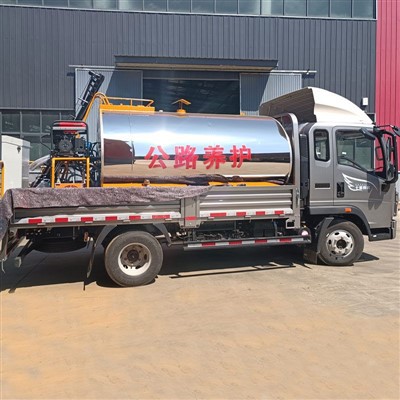
In the construction industry, emulsions are widely used, especially in Anionic Bitumen Emulsion and Emulsified Asphalt Liquid. Cationic emulsifiers are often used to stabilize these emulsions. For example, in road construction, cationic bitumen emulsions are preferred because they have better adhesion to negatively charged aggregates. The cationic emulsifiers in these emulsions prevent the sedimentation of bitumen particles, ensuring a homogeneous mixture during application. This leads to a more uniform and durable road surface.
Cosmetics Industry
In cosmetics, emulsions are used in products such as creams and lotions. Cationic emulsifiers help to keep the oil and water phases of these products well - mixed. They prevent the separation of the oil droplets from the water phase, which would result in an unappealing and less effective product. By reducing sedimentation, cationic emulsifiers ensure that the cosmetic product remains stable and has a consistent texture throughout its shelf life.
Food Industry
In the food industry, emulsions are found in products like mayonnaise, salad dressings, and dairy products. Cationic emulsifiers can be used to improve the stability of these products. They prevent the oil droplets from coalescing and sedimenting, maintaining the desired texture and appearance of the food product. This is particularly important for products with a long shelf life, as sedimentation can lead to an unappetizing appearance and a change in taste.
Factors Affecting the Performance of Cationic Emulsifiers
The effectiveness of cationic emulsifiers in reducing sedimentation can be influenced by several factors.
Concentration
The concentration of the cationic emulsifier is a critical factor. If the concentration is too low, there may not be enough emulsifier molecules to cover the surface of all the dispersed particles, resulting in insufficient electrostatic repulsion and steric hindrance. On the other hand, if the concentration is too high, it can lead to an increase in the viscosity of the continuous phase to an undesirable level or cause other stability issues.
pH
The pH of the emulsion system can also affect the performance of cationic emulsifiers. Cationic emulsifiers are more effective in acidic to neutral pH ranges. In alkaline conditions, the positive charge on the emulsifier head group may be reduced, leading to a decrease in electrostatic repulsion and a higher likelihood of sedimentation.
Temperature
Temperature can influence the behavior of cationic emulsifiers. At higher temperatures, the kinetic energy of the particles increases, which can overcome the electrostatic and steric forces provided by the emulsifier. This may lead to an increase in sedimentation. Additionally, temperature can affect the solubility and adsorption of the emulsifier at the interface.
Our Role as a Cationic Emulsifier Supplier
As a cationic emulsifier supplier, we understand the importance of providing high - quality products that meet the specific needs of different industries. We offer a range of cationic emulsifiers with different chemical structures and properties to suit various applications.
Our research and development team is constantly working to improve the performance of our cationic emulsifiers. We conduct extensive testing to ensure that our products are effective in reducing sedimentation and maintaining emulsion stability under different conditions. We also provide technical support to our customers, helping them to choose the right emulsifier for their specific application and to optimize the formulation of their emulsions.
Contact Us for Procurement
If you are looking for a reliable cationic emulsifier supplier to improve the stability of your emulsions and reduce particle sedimentation, we would be delighted to assist you. Whether you are in the construction, cosmetics, food, or any other industry that uses emulsions, our products can help you achieve better results.
Please feel free to contact us to discuss your specific requirements and to start a procurement negotiation. We are committed to providing you with the best - quality cationic emulsifiers and excellent customer service.
References
- McClements, D. J. (2005). Food Emulsions: Principles, Practice, and Techniques. CRC Press.
- Becher, P. (1965). Emulsions: Theory and Practice. Reinhold Publishing Corporation.
- Tadros, T. F. (2005). Encyclopedia of Emulsion Technology. Marcel Dekker.